

Beautiful Spider Webs: Types, Patterns, and North Carolina Spiders
October 21, 2021
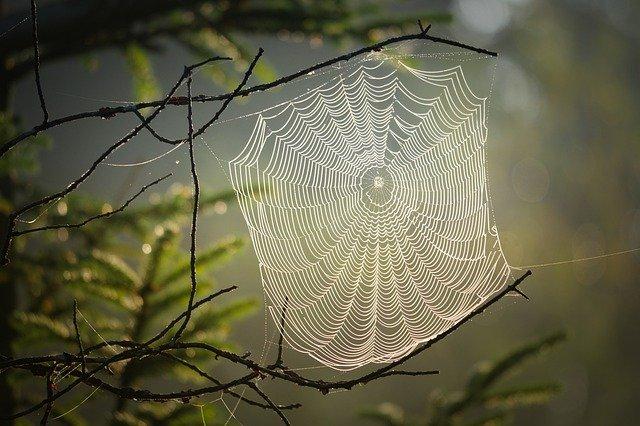
Spiders can be unsettling houseguests, but the webs they create are often striking. From precise circular patterns to loose, tangled silk, different spiders build webs suited to where and how they hunt. North Carolina is home to spiders whose webs can be fascinating to spot outdoors—although a web indoors may also signal that spiders are finding food and shelter nearby.
Below are a few examples of spiders and the beautiful webs they weave, along with practical guidance for when spider activity around your home becomes a concern.
North Carolina Spiders and Their Webs
Black Widows
Black widow spiders are venomous spiders found in North Carolina. They are often recognized by a shiny black body and a red hourglass-shaped marking on the abdomen. They may shelter in dark, undisturbed places around a home, including crawlspaces, beneath appliances, and outdoor utility boxes.
A black widow’s web looks very different from the neat, wheel-shaped web many people picture. Its silk is usually irregular and tangled, with strands extending in several directions. These webs are often built close to the ground in protected corners or around stored items.
Because black widow bites can cause an unpleasant reaction, avoid handling the spider or reaching into areas where one may be hiding. If you see a black widow around your home, use caution and consider professional help.
Orb Weaver Spiders
Orb weavers are responsible for some of the most recognizable and beautiful spider webs: the circular, symmetrical webs with spokes radiating from the center. The shape is why these spiders are called “orb weavers.” A web may look especially dramatic when dew or rain droplets collect on its silk.


These classic webs are often seen between shrubs, garden plants, porch railings, and other outdoor structures. In North Carolina, yellow garden spiders are a familiar example of an orb weaver. They generally spend their time outdoors and catch insects in their webs.
Seeing an orb web in the garden can be a reminder of how much detail goes into a spider’s hunting strategy. Still, a spider web close to doors, walkways, or outdoor seating may need to be removed so it does not become an unwanted surprise.
Other Spiders and Their Webs
Funnel-Web Spiders

Funnel-shaped webs are built as a sheet of silk that narrows into a retreat where the spider waits. Rather than sitting in the center of a round web, the spider stays near the narrow end and rushes out when an insect disturbs the surrounding web.
Funnel-web spiders are associated with several spider groups, and the Sydney funnel-web spider is a well-known Australian example. The web in the photo above shows the distinctive funnel-like form that makes this style so interesting to observe.
Why Spider Webs Look So Beautiful
A spider web can seem almost invisible until light, dew, rain, or dust reveals its lines. That is when the structure becomes easier to appreciate: radial threads, spirals, fine sheets, irregular tangles, or a funnel-shaped retreat. Each design reflects the spider’s approach to sensing and catching prey.
Rain droplets on silk can make a web look jeweled, while a web stretched between branches or grasses can reveal its full pattern. The intricate appearance is part of why spider webs are so often noticed on cool or damp mornings.
Cool Spider Webs in Nature
Some of the most memorable webs are found outdoors, where they span plants, fences, and low vegetation. A dew-covered web can turn an ordinary garden corner into something worth stopping to admire.

Other webs stand out because of their density and intricacy.


What to Do If You Have a Spider Problem
Many spiders found around North Carolina homes are not dangerous, but frequent webs indoors, repeated spider sightings, or the presence of spiders in dark storage areas can become unpleasant. Black widows and brown recluse spiders deserve extra caution because their bites can be dangerous to people.
Start by reducing undisturbed hiding places, clearing webs where appropriate, and addressing insects that can attract spiders. For more information about spider activity in homes, read how common house spiders can create problems for North Carolina homes. You can also learn more about cellar spiders if you are seeing long-legged spiders and loose webs indoors.
A-1 Pest Control serves North Carolina homes and businesses with pest control and termite treatment. If spiders or their webs are becoming a concern around your property, contact A-1 Pest Control to discuss your situation.